
Stablecoin Utility Report 2026

How global consumers use stablecoins to unlock their money.
Download report
In partnership with
YouGov logoCoinbase wordmark logo in white.Black and white icon with the word Artemis in bold text.

Foreword

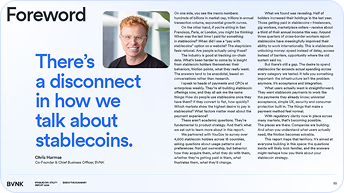
There's a disconnect in how we talk about stablecoins. The macro numbers are impressive – hundreds of billions in market cap, trillions in annual transaction volume. Yet ask someone in San Francisco, Paris or London when they last paid with stablecoins, and skepticism feels rational.
The industry tracks on-chain data well. What's missing is insight from stablecoin holders themselves: their actual behaviors, friction points, and desires.
How do people actually use stablecoins? Which markets show highest payment desire? What matters most for the experience?
We partnered with YouGov to survey over 4,600 stablecoin holders across 15 countries, examining not just ownership but real behavior– usage and preferences.
The findings are revealing. Users want stablecoin payments to feel normal: universal acceptance, simple UX, and built-in security. We hope this report helps you build toward that.

Smiling man with curly red hair and glasses wearing a black shirt in a modern office.
Chris Harmse
Co-Founder & Chief Business Officer,
BVNK

Contributors

Smiling young man with curly red hair, glasses, and a black shirt on a light background.
Chris Harmse
Co-Founder & Chief Business Officer
Smiling woman with wavy blonde hair wearing a patterned top on light blue background.
Nicki Cho
Global Content & Brand Comms
Smiling woman with long blonde hair wearing a black top against a light purple background.
Naomi Barber
Associate Director, Financial Services Research
Portrait of a man with short dark hair, beard, and black glasses wearing a black shirt against light background.
Matthew Palframan 
Director Financial Services Research
Portrait of a smiling man with short brown hair and a beard wearing a black jacket.
Alec Lovett
Head of Developer Product Group
Smiling man with short brown hair wearing a light gray zip-up jacket against a pale background.
John Turner
Product Lead, Stablecoins
Portrait of a young man resting his chin on his hand with a thoughtful expression.
Anthony  Yim
Co-Founder & CEO
Headshot of a man with short dark hair and a beard, smiling, against a light background.
Andrew Van Aken
Data Scientist
In many emerging economies, people have adopted stablecoins out of necessity. What’s changing now is that people in developed markets are starting to feel the same frustrations with money movement.
John Turner
Group Product Manager for stablecoins

Executive summary

Stablecoin holdings 
are rising fast.
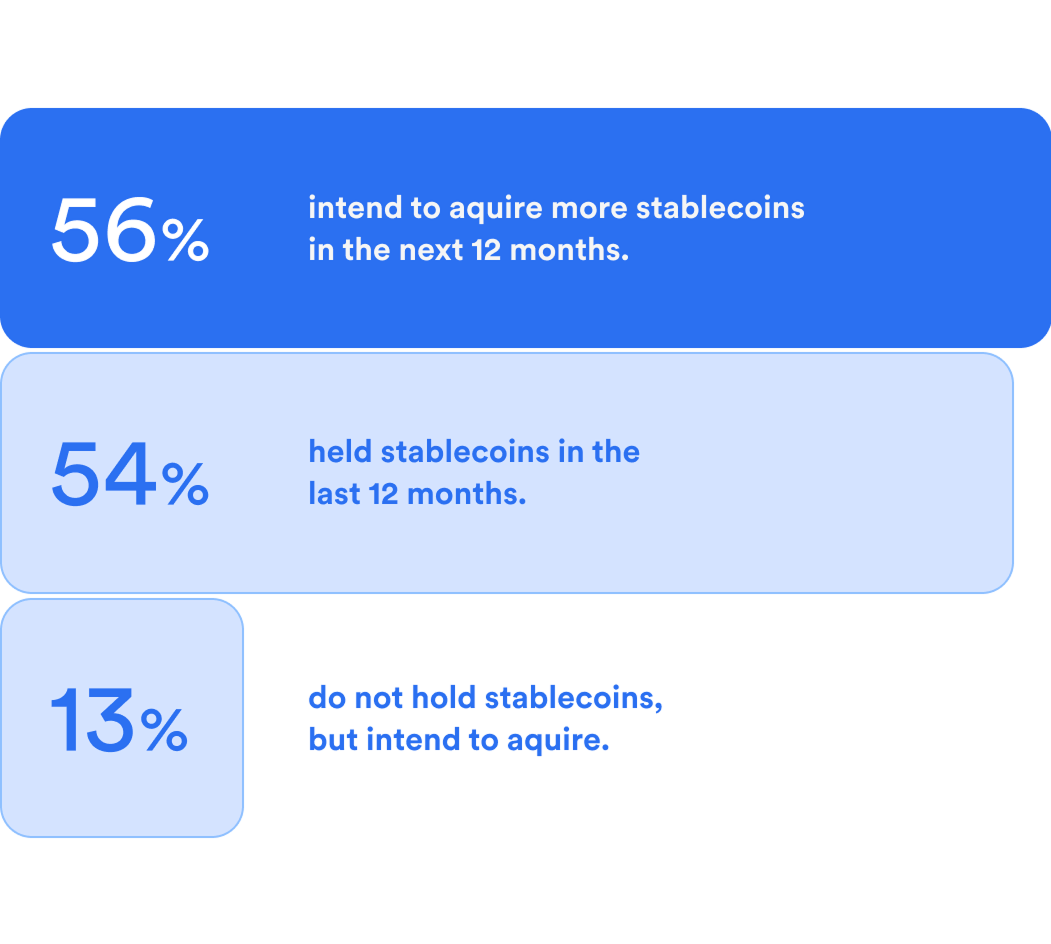
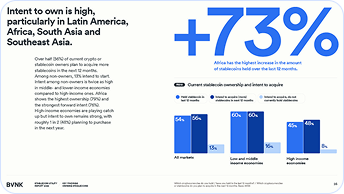
Half of stablecoin holders increased their holdings in the last 12 months. Over half (56%) plan to acquire more in the next year, while 13% of non-owners intend to start. Ownership skews young and entrepreneurial. Men are more likely to own stablecoins (60%), except in Africa where women are equally likely (51%).
56% intend to acquire more stablecoins, 54% held stablecoins last 12 months, 13% do not hold but intend to acquire.
Stablecoins have become an important part of modern wealth.
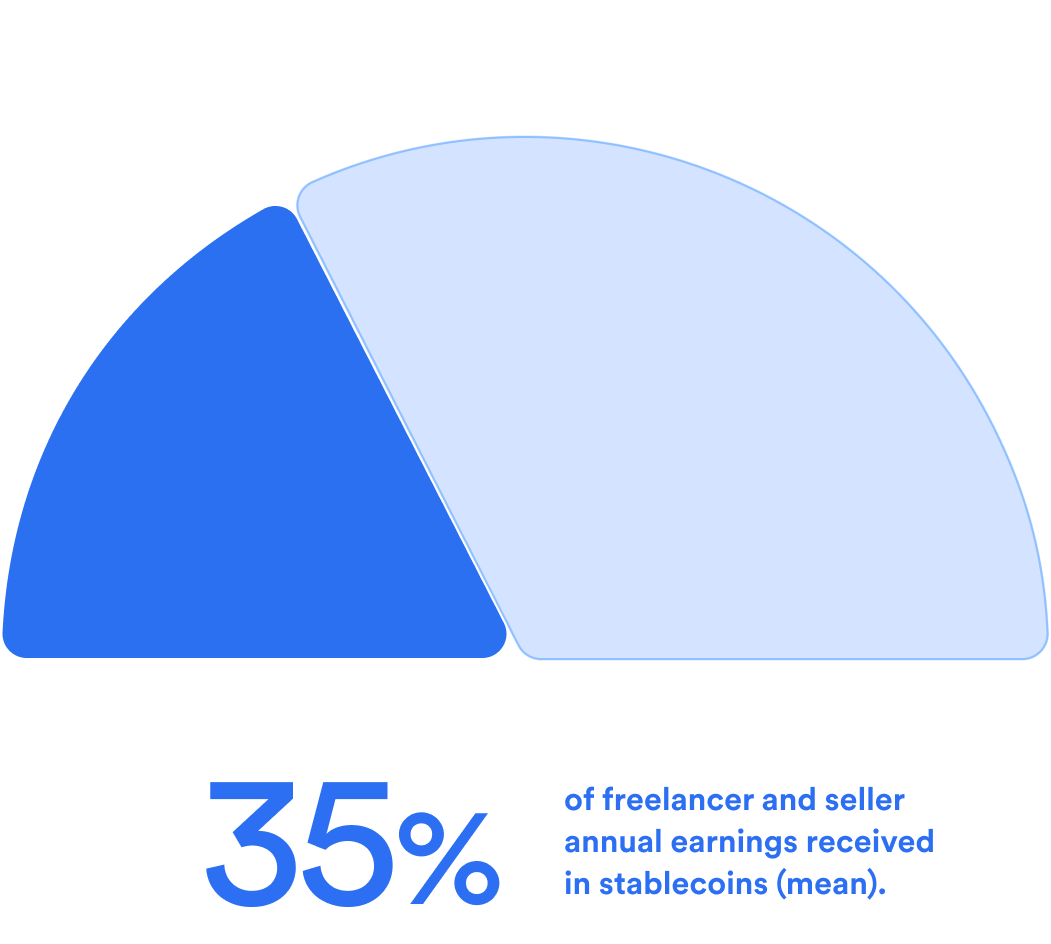
Stablecoin holders are willing to allocate one-third of their savings to crypto and stablecoins. Those who get paid in stablecoins (freelancers, gig workers, marketplace sellers) receive around 35% of their income this way. 3 in 4 say it has increased their ability to do business internationally. Desire to get paid in stablecoins is highest in Africa and APAC.
Pie chart showing 35% of freelancer and seller annual earnings received in stablecoins (mean).
For wallets, exchanges dominate, but banks and fintechs have a strong right to play.
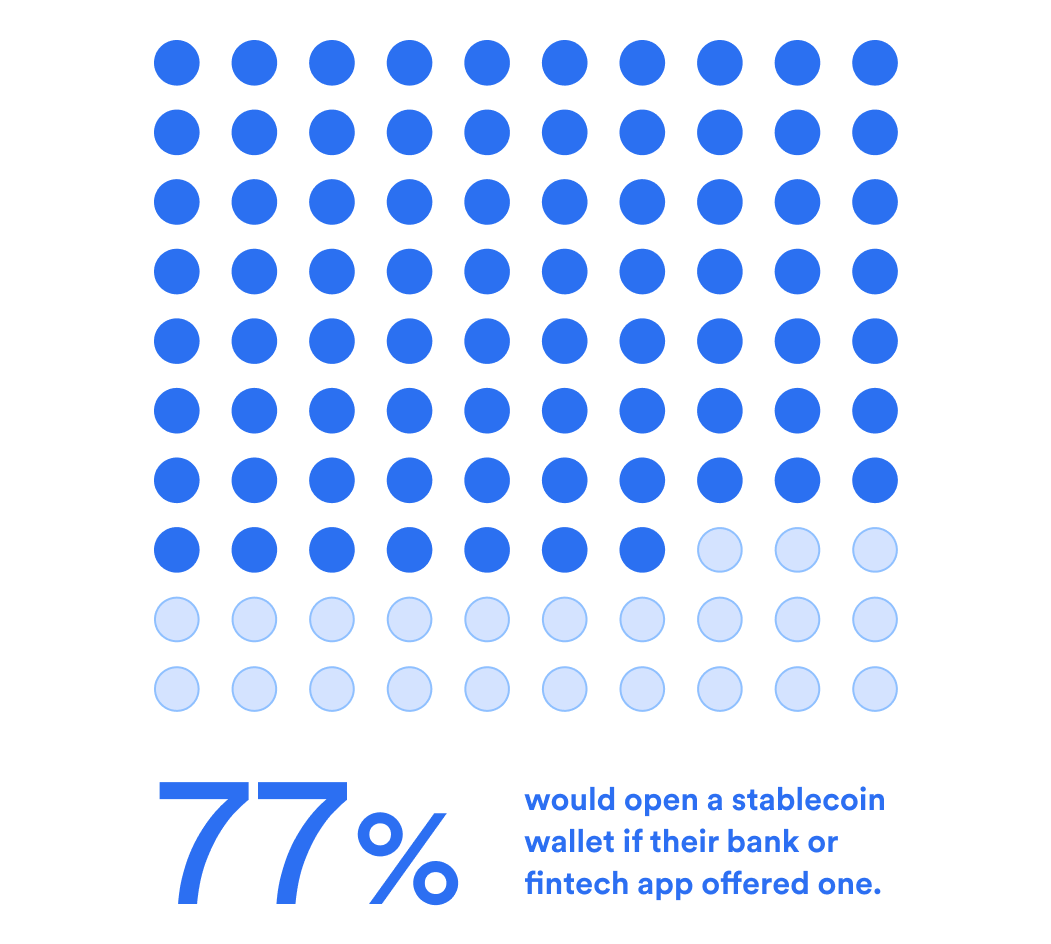
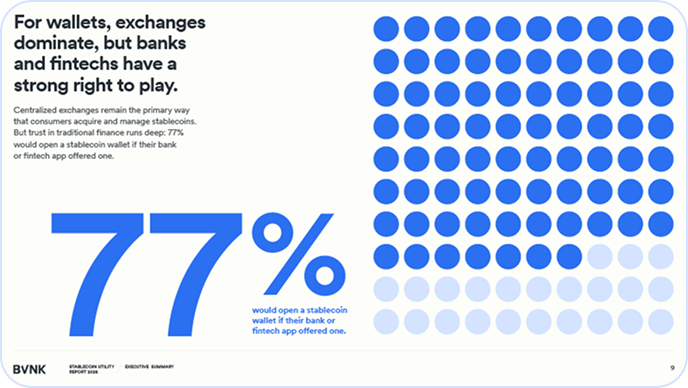
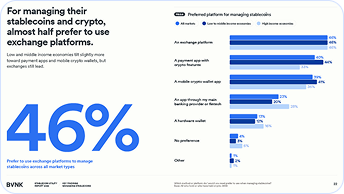
Centralized exchanges remain the primary way that consumers acquire and manage stablecoins. But trust in traditional finance runs deep: 77% would open a stablecoin wallet if their bank or fintech app offered one.
Graphic showing 77% in blue with dots representing people who would open a stablecoin wallet if offered by their bank or app.
Stablecoins move. 
They’re not stuck in wallets.
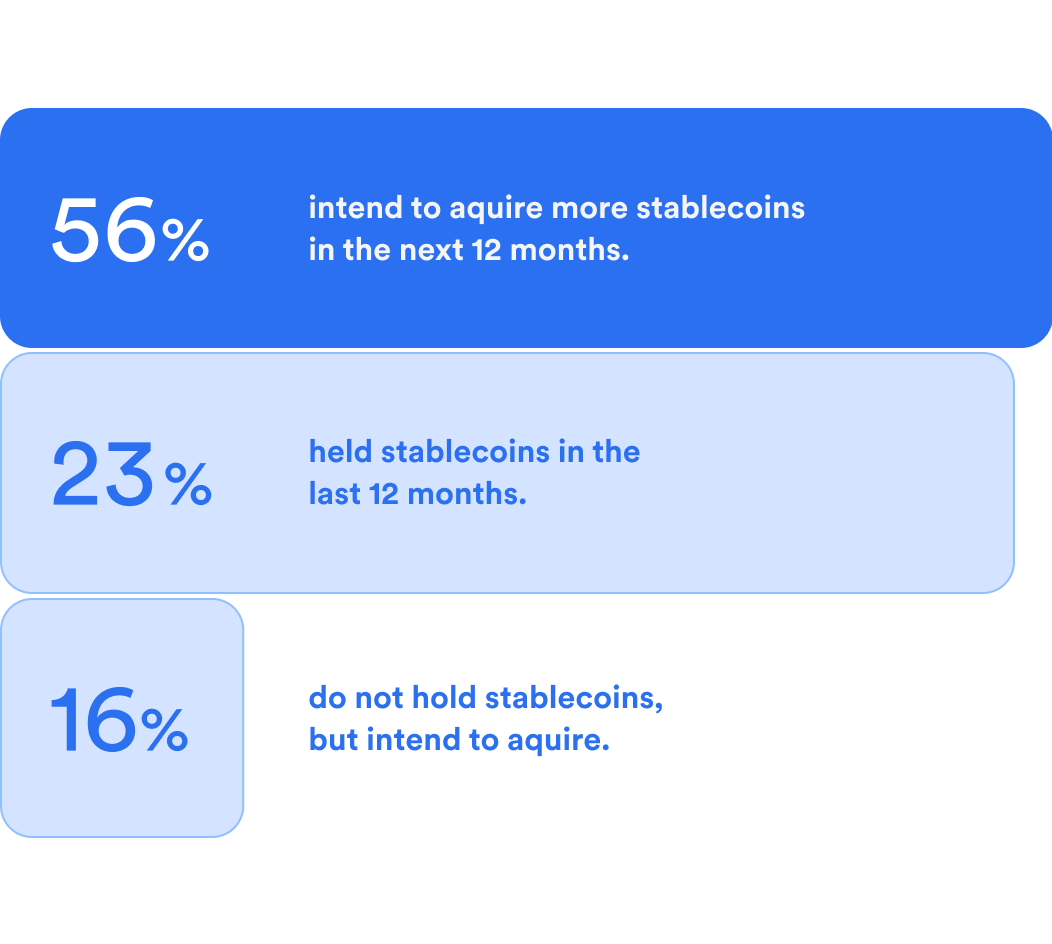
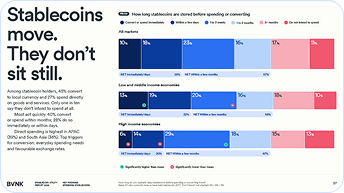
Most holders convert or spend quickly  –  more than 1 in 4 (28%) do so within days. Merchant acceptance is a critical blocker. Desire to spend stablecoins exceeds actual spending in every spend category we tested, and almost 3 in 4 (71%) are likely to use a card to spend their stablecoins. Stablecoin acceptance drives new customer acquisition: half of stablecoin holders have bought something from a business specifically because it accepted stablecoins.
56% intend to acquire more stablecoins, 23% held stablecoins last 12 months, 16% do not hold but intend to acquire.
Stablecoin users want mainstream payment behaviour
Lower fees (30%), security (28%), and global access (27%) drive current adoption of stablecoin payments. But holders dislike complexity –  too many steps, network choices, irreversible transactions. The gap is clear: consumers want stablecoin payments to work like any other payment. Universal acceptance, seamless UX, built-in consumer protection. No compromises.
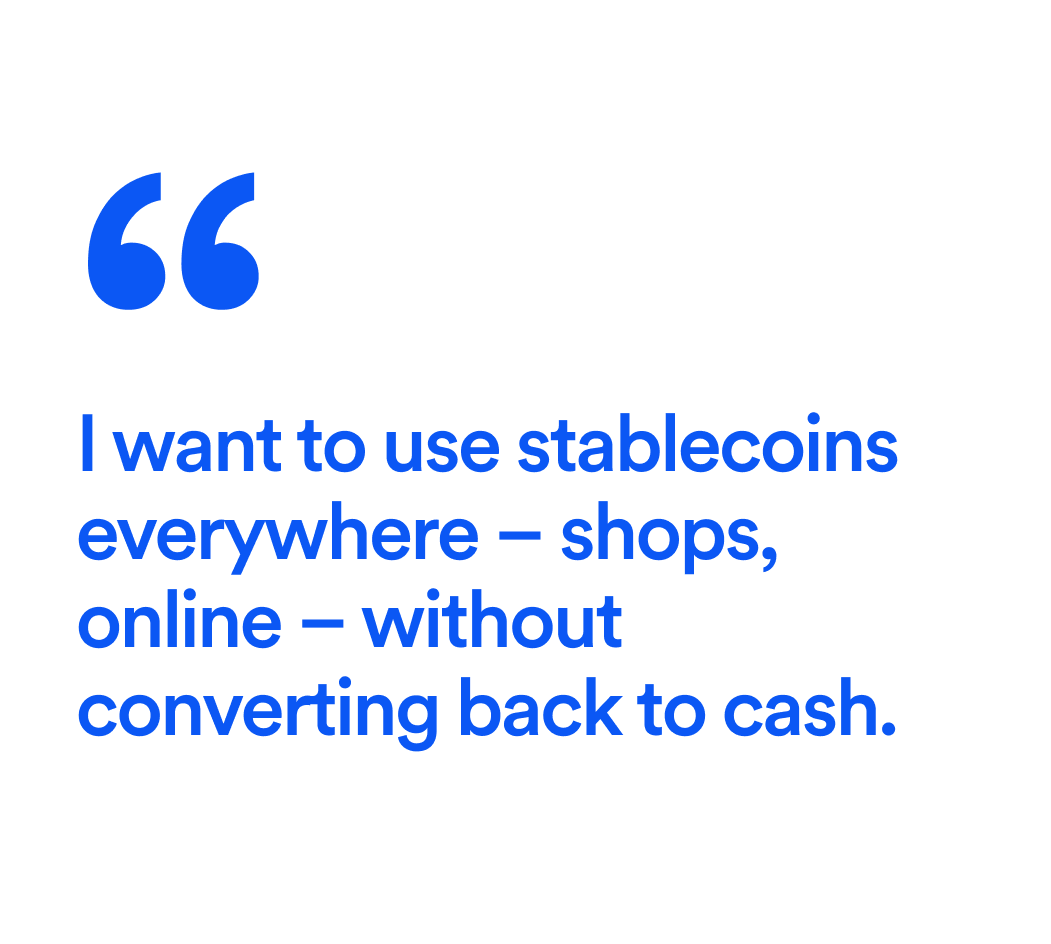
Quote saying: I want to use stablecoins everywhere—shops, online—without converting back to cash.

Methodology

15
Countries
4,658
People
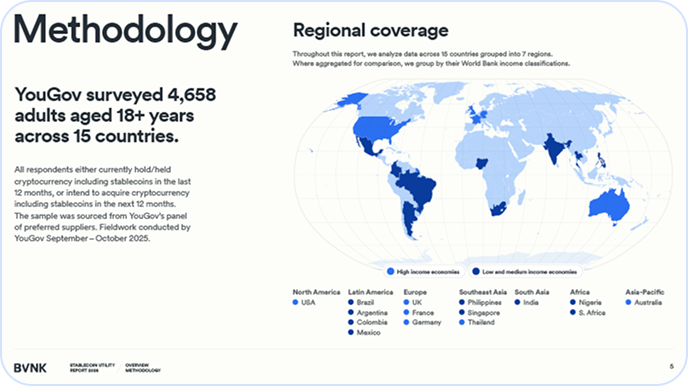
YouGov surveyed 4,658 adults online aged 18+ years across 15 countries.
All respondents either currently hold/held cryptocurrency including stablecoins in the last 12 months, or intend to acquire cryptocurrency including stablecoins in the next 12 months. The sample was sourced from YouGov’s panel or preferred suppliers. Fieldwork conducted online by YouGov September – October 2025.

Get the full report

Learn how global consumers are using stablecoins 
to unlock their money.
World map showing 15 countries surveyed by YouGov for cryptocurrency use, grouped by income levels and regions.
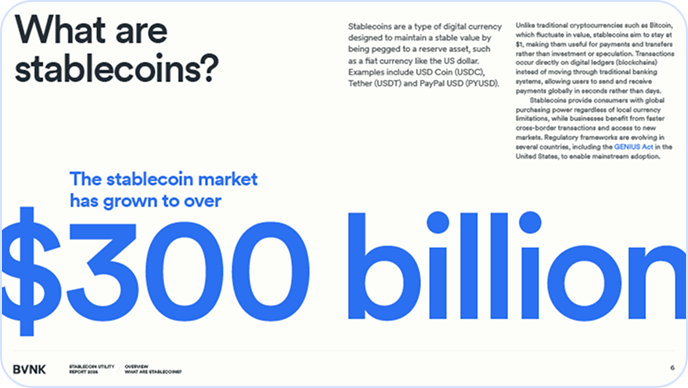
Text explaining stablecoins as digital currency with a market growing over $300 billion.
Infographic showing 77% would open a stablecoin wallet if offered by bank or fintech app.
Foreword titled 'There’s a disconnect in how we talk about stablecoins' by Chvrch, co-founder of Bvnk.
Smiling young woman holding a phone, sitting indoors next to text about growing holdings and accelerating momentum.
Chart shows +73% rise in stablecoin holdings, highest in Latin America, Africa, South Asia, Southeast Asia.
Bar chart showing 46% prefer exchange platforms for managing stablecoins and crypto, with details of other platform choices.
Chart showing stablecoin holders’ wallet activity before spending, grouped by income levels with percentages.
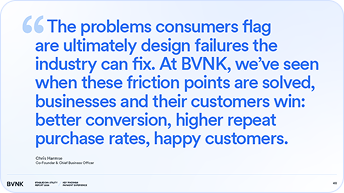
Quote from Chris Harmse about solving consumer problems improving conversion and customer happiness.
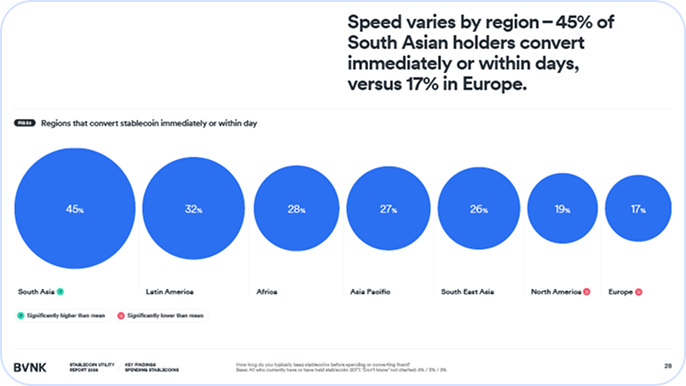
Blue circles show stablecoin conversion rates by region: South Asia 45%, Europe 17%, others in between.
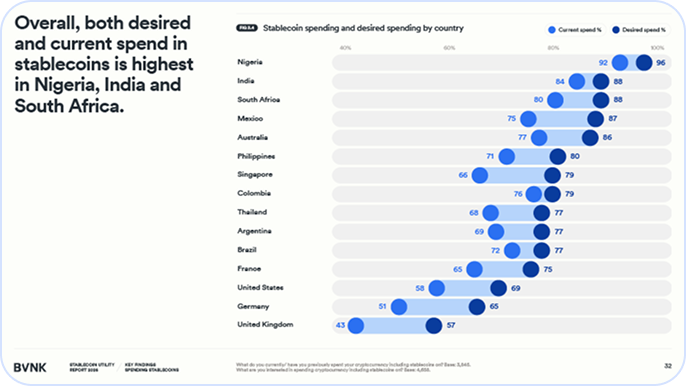
Chart showing Nigeria, India, South Africa lead in current and desired stablecoin spending percentages.
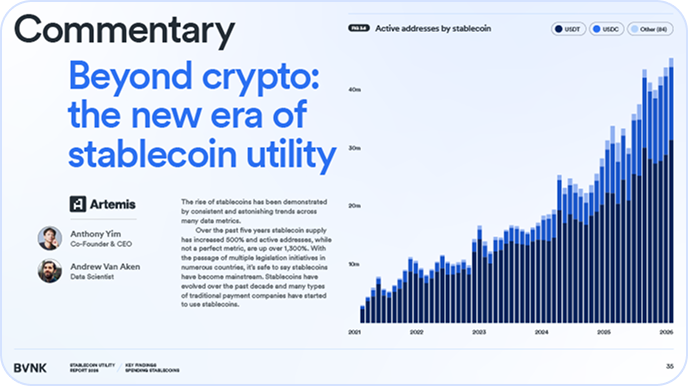
Bar chart showing steady growth of active stablecoin addresses from 2021 to 2026 by USDT, USDC, and others.
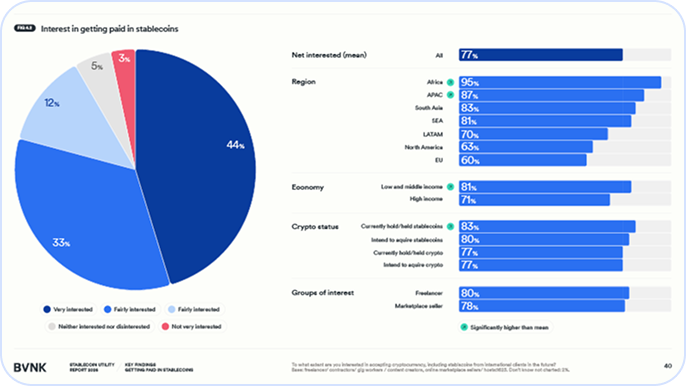
Chart showing 77% interested in stablecoin pay, with highest interest in Africa and freelancers.
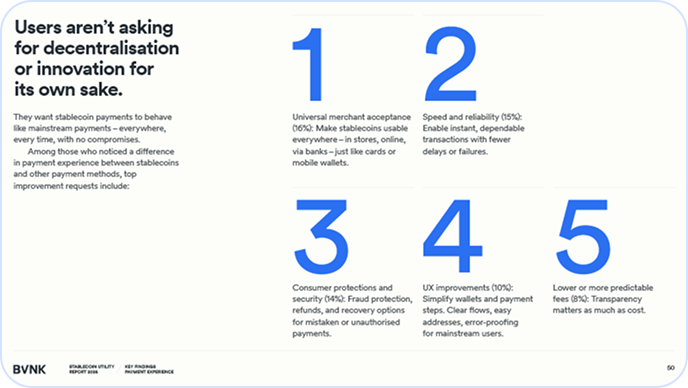
Text list of five user requests on stablecoin payments: acceptance, speed, security, UX, and predictable fees.
World map showing 15 countries surveyed by YouGov for cryptocurrency use, grouped by income levels and regions.
Text explaining stablecoins as digital currency with a market growing over $300 billion.
Infographic showing 77% would open a stablecoin wallet if offered by bank or fintech app.
Foreword titled 'There’s a disconnect in how we talk about stablecoins' by Chvrch, co-founder of Bvnk.
Smiling young woman holding a phone, sitting indoors next to text about growing holdings and accelerating momentum.
Chart shows +73% rise in stablecoin holdings, highest in Latin America, Africa, South Asia, Southeast Asia.
Bar chart showing 46% prefer exchange platforms for managing stablecoins and crypto, with details of other platform choices.
Chart showing stablecoin holders’ wallet activity before spending, grouped by income levels with percentages.
Quote from Chris Harmse about solving consumer problems improving conversion and customer happiness.
Blue circles show stablecoin conversion rates by region: South Asia 45%, Europe 17%, others in between.
Chart showing Nigeria, India, South Africa lead in current and desired stablecoin spending percentages.
Bar chart showing steady growth of active stablecoin addresses from 2021 to 2026 by USDT, USDC, and others.
Chart showing 77% interested in stablecoin pay, with highest interest in Africa and freelancers.
Text list of five user requests on stablecoin payments: acceptance, speed, security, UX, and predictable fees.